
When love comes
The Body of Christ, the real ecclesiology, will not miss Love simply because Love does not arrive as spectacle.

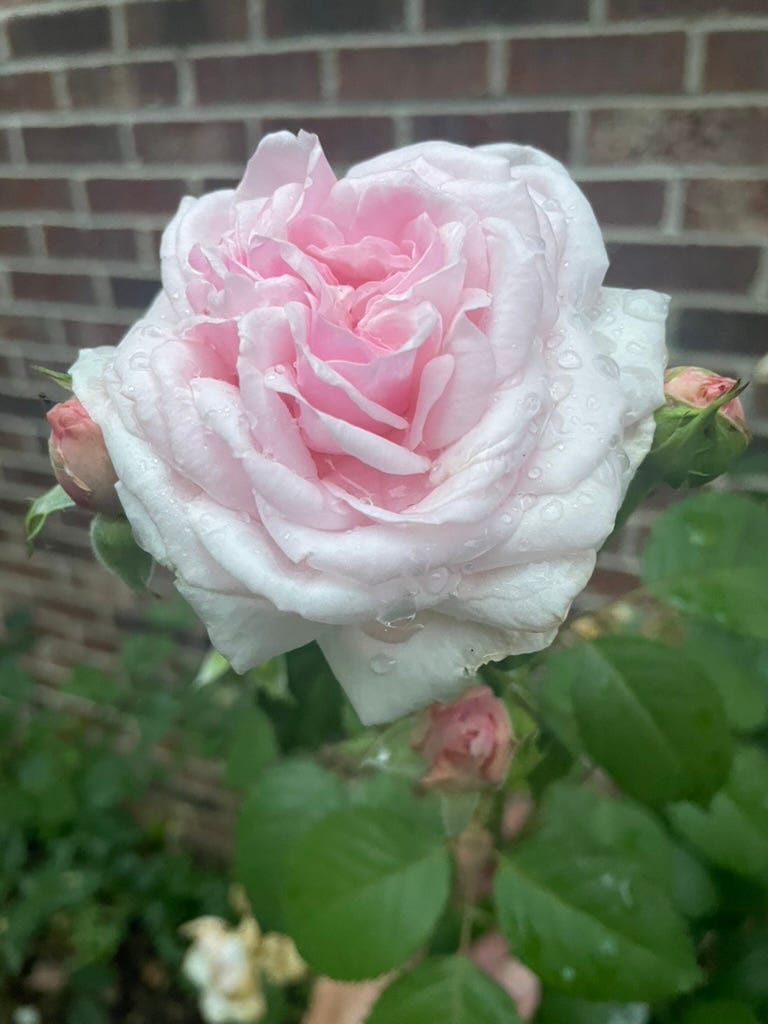
— from this morning, after the dawn rain (in Edenton, North Carolina, near the shore of the Albemarle Sound)
I’m thinking about ecclesiology this morning, as I’ll probably be teaching it in the Fall semester.
So I’m daydreaming about the contours of the course and its subject:
The Church is canonical, but not captive.
Institutional, but not reducible to institution.
Hierarchical, but only if hierarchy means service, footwashing, and the refusal of domination.
Eucharistic, or she is nothing.
Pentecostal, or she becomes archive.
Marian, or she becomes managerial.
Sophianic, or she forgets creation.
Poor, or she lies about the Gospel.
Beautiful, or she cannot tell the truth.
Christological in interpretation, action, and prayer.
Actually: Christ. Or nothing.
Or worse, the Church becomes a bad tree producing bad fruit: fear, contempt, scapegoating, despair, cruelty, theological sadism, delight in damnation, misogyny, domination, spiritual exhaustion, and little souls bent double under heavy burdens.
Then the tree has disclosed itself.
No amount of doctrinal foliage can hide rotten fruit forever.
The Body of Christ must not miss Wisdom when she comes. It must not, like the Pharisees and scribes, demand spectacle, signs, and wonders like a dog and pony show.
The Body of Christ, the real ecclesiology, will not miss Love simply because Love does not arrive as spectacle.
Love comes tired, dusty, thirsty, asking a Samaritan woman for water.
Love comes touching lepers, noticing widows, eating with sinners, blessing children, telling stories about seeds and birds and bread and lost coins.
Love comes as the ordinary texture of creation restored to its truth.
The greatest miracle is not an interruption of creation.
It is creation unveiled.
Especially in the mediation of the Second Adam, who comes to bring Eden again.